



Bhubaneswar, Oct 23: The process to repatriate five orangutan infants rescued from Bichitrapur forest in Odisha’s Balasore district has gathered momentum, with Indonesia preparing to send a team of wildlife experts to India next month. However, the investigation into the suspected international wildlife trafficking network behind their arrival in Odisha remains inconclusive.
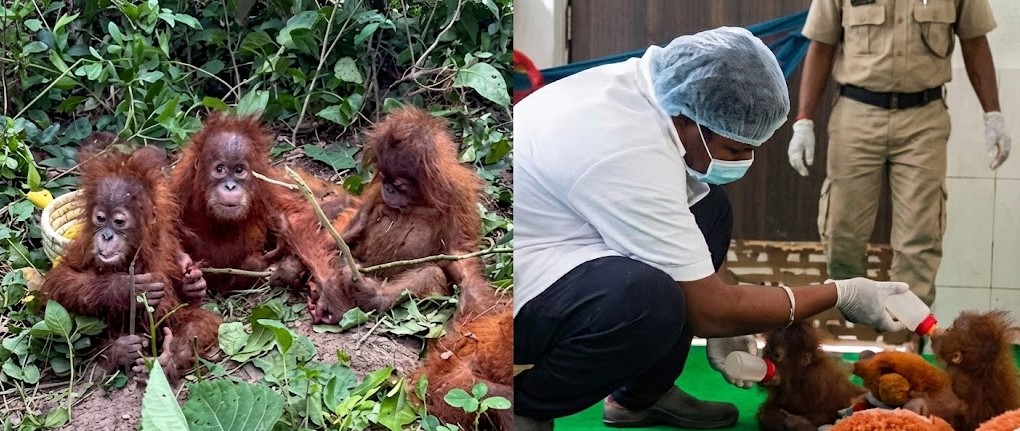
A five-member team of Indonesian wildlife experts is expected to visit India in November to coordinate the repatriation process. The animals, rescued on September 8, are currently being housed at Nandankanan Zoological Park in Bhubaneswar, where they are reportedly healthy and receiving veterinary care.
The proposed transfer will depend on the completion of the necessary legal formalities and regulatory procedures, along with coordination between the authorities of the two countries.
Investigation Yet to Identify Suspected Traffickers
While preparations are underway to send the orangutans back to their country of origin, the Crime Branch’s Special Task Force (STF) is continuing its investigation into how the animals were brought to Odisha and who was responsible for their alleged trafficking.
Investigators have reportedly examined CCTV footage to trace the movement of the orangutans from Kolkata through Digha before they reached Bichitrapur in Balasore district. Despite these efforts, the suspected smugglers and the wider network allegedly involved in the operation remain unidentified.
The case has raised concerns about the possible movement of protected wildlife across international borders and the challenges involved in tracing those responsible for such activities.
DNA Testing Remains a Key Step
The Forest Department has maintained that DNA testing is necessary to establish the species and origin of the rescued animals. However, the tests have not yet been conducted, leaving an important aspect of the investigation pending.
Scientific confirmation, along with the completion of the required documentation and clearances, is expected to play a significant role in determining the next steps for the animals’ repatriation.
Previous Repatriation Offers a Precedent
In a similar case, a Sumatran orangutan rescued in India in November 2024 was recently returned to Indonesia through coordinated efforts involving wildlife authorities in both countries and officials associated with the Convention on International Trade in Endangered Species of Wild Fauna and Flora (CITES).
That case highlights the importance of international cooperation in addressing wildlife trafficking and ensuring the safe return of animals to their country of origin.
For the five orangutan infants at Nandankanan, the immediate priority remains their continued care and safe repatriation once all necessary procedures are completed.
As Indonesian experts prepare for their expected November visit, attention remains divided between the efforts to bring the animals home and the unanswered questions surrounding how they entered Odisha and who facilitated their alleged illegal transportation.
