



22Amstelveen, Netherlands | Jan 22:
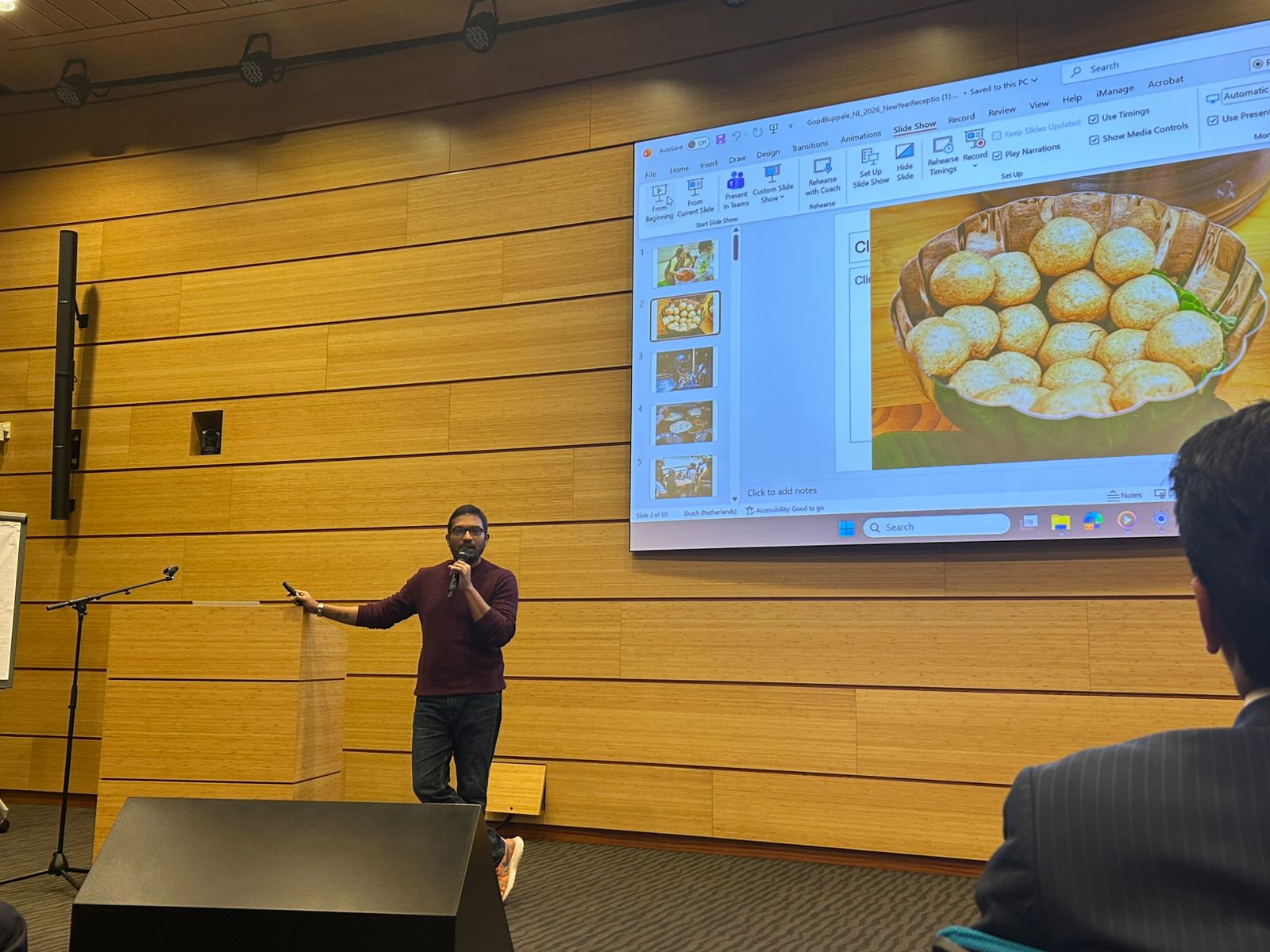
• Hyderabad-based Gopi Byluppala delivered the keynote at the NICCT New Year Reception 2026 in the Netherlands, showcasing Telugu culinary tourism as a scalable model linking farmers, entrepreneurs, and global consumers.
• The event, attended by senior business and civic leaders from India and the Netherlands, positioned Telangana and Andhra Pradesh’s culinary initiatives as emerging tools for cross-border collaboration and rural economic impact.
Amid growing international dialogue on trade and cultural exchange, Telugu culinary heritage emerged as a compelling narrative of soft power and rural development at the NICCT New Year Reception 2026 in the Netherlands.
Hosted by the Netherlands India Chamber of Commerce & Trade at KPMG, Amstelveen, the reception brought together over 150 business leaders, policymakers, and industry delegates, reinforcing the growing Indo–Dutch partnership across trade, tourism, and innovation.
The highlight of the evening was the keynote address by India-based Gopi Byluppala, food systems architect, cultural entrepreneur, and founder of The Culinary Lounge, Hyderabad, who positioned culinary tourism as a strategic accelerator for rural economies, with Telangana and Andhra Pradesh at the forefront of this transformation.
Addressing an audience that included Marc Broskij, Chief Operating Officer of KPMG Netherlands, Edith Nordmann, Chairman of NICCT, and T. Poppens, Mayor of Amstelveen, Byluppala illustrated how food can translate hyperlocal livelihoods into globally relevant experiences.
“From a composed Andhra thali to rural women-led Telangana sarvapindi and ippa puvvu laddu prepared by Adilabad’s tribal communities are high potential economic instruments,” said Gopi Byluppala. “Culinary tourism can link farmers, chefs, entrepreneurs, and global consumers, converting local impact into meaningful global journeys.
” He noted that Dutch and European travellers are increasingly seeking authentic, sustainable, and purpose-driven experiences, creating a strong opportunity for the Telugu states to position their culinary ecosystems as high-value tourism offerings.
The dialogue gained additional relevance as European Commission President Ursula von der Leyen, speaking earlier the same day at the World Economic Forum in Davos, stated that the proposed EU–India trade agreement could create a market of nearly two billion people, accounting for about one-fourth of global GDP. Against this backdrop, culinary and cultural industries gain significance as important bridges for economic engagement and people-to-people ties between India and Europe.
“NICCT and Netherlands ecosystem will play vital role in building an impactful & purposeful Culinary Toursim in both Telangana and Andhra pradesh. This is going to create more rural jobs and economy in the telugu states” shared Edith Nordman, who was recently in Hyderabad to initiate knowledge sharing for the Telangana Culinary Accelerator.
Welcome remarks by Marc Broskij highlighted the Netherlands’ role as a key European gateway for India, while NICCT Chairman Edith Nordmann emphasised the importance of culture-led commerce in strengthening bilateral relationships. Mayor T. Poppens reflected on Amstelveen’s international outlook and its role in fostering Indo–Dutch collaboration.
The NICCT New Year Reception reaffirmed that Telugu culinary tourism is no longer a regional story, but an emerging global proposition, aligning culture, commerce, and community impact at a pivotal moment for India–EU relations.
The evening also coincided with the presence of Chief Minister A. Revanth Reddy of Telangana and Chief Minister N. Chandrababu Naidu of Andhra Pradesh at the World Economic Forum in Davos, underscoring the growing global attention on India’s regional economic initiatives.
