



Chennai, June 5: School of Design Thinking , a global leader in human-centric innovation, in collaboration with Ratan Tata
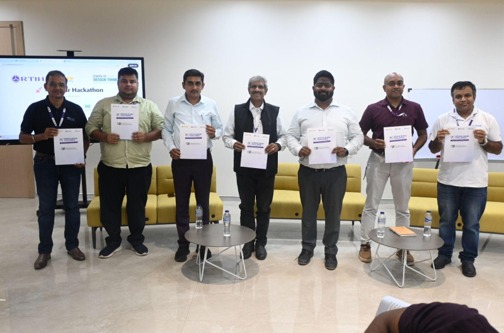
Commenced at the RTIH campus in Mangalagiri on June 2, the challenge offered participants an opportunity to apply Design Thinking to a complex public-sector challenge. Unlike conventional hackathons that focus primarily on coding and rapid prototyping, Design Spark Challenge was anchored in SoDT’s proprietary “Design
The challenge sought to conceptualise a comprehensive digital ecosystem that extends beyond a traditional Learning Management System. Participants were tasked with envisioning a unified platform that seamlessly integrates learning, mentorship, opportunities, innovation supp
Over the course of the challenge, teams translated stakeholder insights into solution concepts and working prototypes designed to address the needs of learners, mentors, educational institutions, startups, and government stakeholders. The structured design process enabled participants to move beyond surface-level solutions and focus on scalable interventions rooted in real-world needs.
Speaking about the significance of the initiative, P. Dhatri Reddy, Chief Executive Officer, APIS & RTIH, shared her perspective that the initiative aligns with the Government of Andhra Pradesh’s vision of building a globally competitive startup ecosystem and accelerating digital transformation through innovation-driven governance. She noted that the Design Spark Challenge has the potential to generate pilot solutions that can be integrated into the state’s broader innovation, education, and digital governance frameworks.
Highlighting the critical importance of problem immersion, Dr. Anbu Rathinavel, Co-Founder and Head of School of Design Thinking, noted, “At SoDT, we believe that innovation begins long before solutions are created. It begins with understanding people, immersing ourselves in their realities, and asking better questions. Through our Design The Thinking® methodology, participants were encouraged to spend time with the problem, understand the ecosystem, and challenge assumptions before moving into solution design. What emerged over these 48 hours was not just a set of prototypes, but a deeper appreciation of how empathy, systems thinking, and human-centred design can unlock meaningful and scalable innovation. The quality of ideas presented by the teams demonstrates the power of staying with the problem before rushing to the solution.”
The initiative underscores Andhra Pradesh’s broader vision of leveraging innovation, entrepreneurship, and collaborative problem-solving to strengthen public infrastructure and digital service delivery. By creating a platform where startups can engage directly with public-sector challenges, the programme encourages the development of solutions that are scalable, inclusive, and aligned with the evolving needs of citizens and institutions.
The event concluded with participating teams presenting their concepts and prototypes before an eminent jury comprising experts from innovation, technology, design thinking, academia, and public policy. Solutions were evaluated on parameters including user-centricity, scalability, feasibility, security, and long-term impact.
Design Spark Challenge 2026 reflects the School of Design Thinking’s mission to help institutions, governments, entrepreneurs, and educators solve complex challenges through human-centred innovation, systems thinking, and purposeful design.
