



Bhubaneswar, Oct. 6 (UDN): Bhubaneswar is witnessing an unusual spell of October heat, with daytime temperatures climbing to around 34°C to 36°C, several degrees above the seasonal normal.
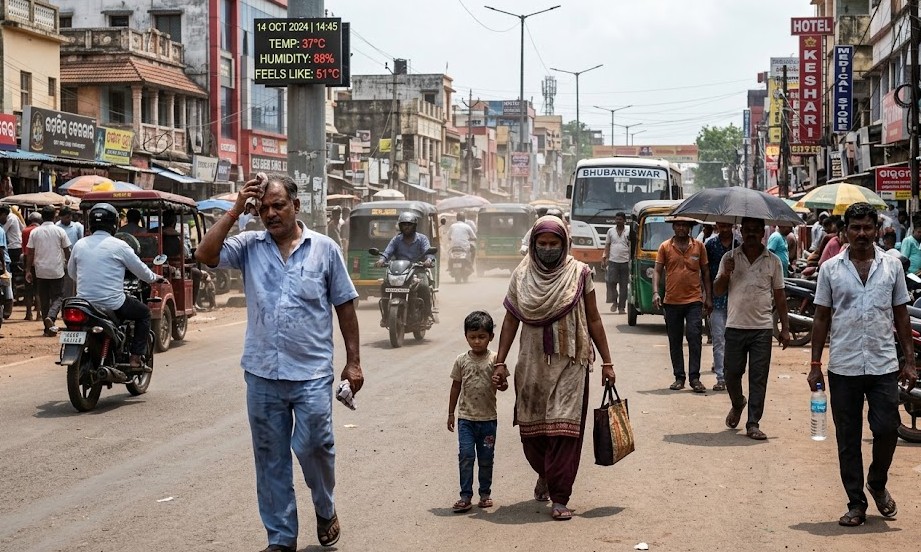
Representational Image
The combination of elevated temperatures and persistent coastal humidity has made the weather particularly uncomfortable, with the heat index or ‘feels-like’ temperature in some conditions reaching significantly higher levels.
Humidity levels hovering between 70% and 90% are adding to the discomfort by slowing the evaporation of sweat from the body, making the heat feel more oppressive than the actual air temperature.
Unusual warmth during the post-monsoon transition
The October heat comes during the transition from the southwest monsoon to the drier post-monsoon season.
With clearer skies and stronger sunshine during the daytime, the land surface can absorb substantial solar heat. The resulting warming is particularly noticeable across densely built-up parts of Bhubaneswar, where concrete structures and paved surfaces retain heat.
Urbanisation adds to the discomfort
The city’s expanding built-up landscape is another factor contributing to local heat.
Reduced vegetation, extensive concrete surfaces, traffic and dense construction can create an urban heat island effect, in which urban areas remain warmer than surrounding less-developed regions.
During the afternoon, this accumulated heat can make outdoor conditions feel considerably harsher, particularly for people working or travelling in direct sunlight.
Humidity makes the heat harder to tolerate
High humidity is a major reason why residents may feel considerably hotter than the thermometer reading suggests.
When atmospheric moisture is high, the body’s natural cooling mechanism—evaporation of sweat—becomes less efficient. As a result, prolonged exposure to the heat can increase the risk of dehydration, exhaustion and other heat-related discomfort.
Children, elderly people, outdoor workers and those with existing health vulnerabilities should take particular care during the hottest part of the day.
Residents advised to take precautions
People in Bhubaneswar are advised to remain hydrated, avoid unnecessary exposure to direct sunlight during peak afternoon hours and wear light, breathable clothing.
Outdoor workers and commuters should take regular breaks in shaded or cool areas and remain alert to symptoms such as excessive sweating, dizziness, weakness or headache.
The current spell serves as a reminder that October, despite marking the onset of autumn, can still bring intense heat to coastal Odisha, especially when high temperatures combine with substantial humidity.
As Bhubaneswar continues to urbanise, the impact of rising daytime temperatures and the urban heat island effect is also likely to remain an important issue for the city’s planners and residents.
